SSP makes EMI shielding silicones for EMI gaskets and O-rings. Compare our materials to Parker Chomerics CHO-SEAL, Nolato Jabar, and W.L. Gore EMI shielding.
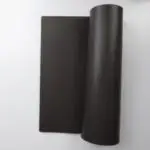
SSP supplies EMI shielding silicones as sheets, rolls, extrusions, and moldable compounds. Sheets and rolls are available with a pressure-sensitive adhesive (PSA) backing.
In addition to EMI shielding materials, SSP offer fabricated products, included EMI gaskets and EMI O-rings in M83528 slash sizes.

SSP makes EMI shielding that meets the lettered requirements of MIL-DTL-83528, a standard from the U.S. military. All of our M83528 shielding silicones are part of the Qualified Product List (QPL) from the Defense Logistics Agency (DLA). Choose Type A, B, C, D, and K materials for EMI gaskets and EMI O-rings.
SSP makes nickel-plated aluminum filled silicones and flurorosilicones that are designed for corrosive environments with heavy salt spray, including military ships and marine applications. Salt Spray Test data is available for these corrosion resistant EMI gasket materials.
SSP makes softer, electrically conductive silicones in durometers as low as 30 Shore A. These EMI silicones allow for lower enclosure forces and better sealing capabilities. Products include offsets to discontinued EMI gasket materials from W.L. Gore.
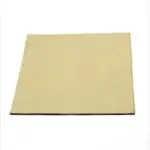
EMI shielding materials that use fluorosilicone as the base elastomer provide fuel and solvent resistance. Applications include jet fuels, de-icing fluids, and other harsh chemicals. These electrically conductive silicones include a QPL listed MIL-DTL-83528 material.
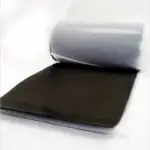
SSP makes low outgassing, electrically conductive silicone materials for space and high vacuum applications. These EMI shielding materials are tested to ASTM E595 via third-party laboratories.

These EMI silicones are extremely conductive elastomers where the lowest possible surface conductivity is required. They are SSP’s most electrically conductive EMI gasket materials.
These EMI shielding elastomers are UL94 V0 vertical burn tested and provide reliable environmental sealing along with flame resistance.
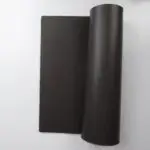
Conductive fabric reinforced shielding elastomer for maximum structural stability used in thin wall parts to prevent tearing. Learn more about these electrically conductive silicones.
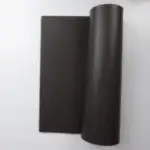
SSP’s most cost-effective EMI shielding materials, SSP502-65, supports thinner, smaller, and lighter-weight designs. Unlike silver-filled silicones, this nickel-graphite filled EMI shielding material isn’t subject to fluctuating silver prices.
SSP2514-75 is a nickel coated graphite filled conductive EPDM based shielding elastomer. Use this EMI gasket material when you need excellent ozone and UV resistance along with good compression set and solvent resistance.
Dominic Testo
Business Development Manager
Specialty Silicone Products
Note: This content originally appeared in the December 2025 edition of Rubber World magazine.
Electromagnetic interference (EMI) is a naturally-occurring or human-caused phenomenon that degrades or disrupts electronics or electrical equipment. The causes of EMI are numerous and range from lightning, solar flares, and auroras to wireless devices, power and transmission lines, and high-voltage equipment and machinery. The consequences range from dropped calls and slow Wi-Fi to unreliable equipment and failed communications.
As its name indicates, EMI is both electromagnetic and problematic. The “electromagnetic” in EMI refers to how electric current has forces and effects that are electrical and magnetic in nature. The “interference” refers to how when an electromagnetic signal is propagated, that signal can be received by a circuit other than the intended recipient. For example, the radio frequency (RF) signals from a cell phone can be received by and interfere with nearby medical equipment.
EMI is associated with radio frequency interference (RFI), but EMI and RFI are not identical. Typically, RFI refers to lower-frequency interference from an external source while EMI refers to higher-frequency interference from within the device itself. Like RFI, however, EMI affects electromagnetic compatibility (EMC), the ability of different devices to operate without mutual interference. To meet EMC requirements, engineers need shielding materials for electrical and electronic enclosures.
Depending upon the specific application, engineers can select electrically conductive paints or coatings, conductive foils or fabrics, or plastics and elastomers that contain specialized fillers. Most polymers are electrically insulating, but the addition of metal or metal-coated particles (or wire mesh) imparts electrical conductivity. Primarily through reflection, electrically conductive materials cause a portion of an electromagnetic wave to bounce off their surface.
For EMI shielding at the enclosure level, electrically-conductive elastomers are fabricated into EMI gaskets that are installed between surfaces to fill gaps, or into EMI O-rings that fit a groove and are crushed in place. There are many types of elastomers, but silicones are an excellent choice for the base material. Among their advantages, they provide reliable environmental sealing and broad thermal insulation. Silicones are also flexible, compressible, and maintain their properties over time and with temperature changes.
Silicones support reliable sealing because they resist water, moisture, ozone, and sunlight. These synthetic polymers also resist oils and chemicals that could damage other materials. Importantly, silicones can withstand higher and lower temperatures than commonly used elastomers such as EPDM, nitrile, or neoprene. In addition, silicones are available in formulations that provide UL 94V0 flame resistance or have ASTM E585 low levels of outgassing.
Silicones have many desirable properties but loading them with a high percentage of metal particles could cause them to become too hard, too brittle, or too thick to support today’s thinner electronic designs. Materials manufacturers, including Specialty Silicone Products (SSP), have overcome these limitations. Today, engineers can choose electrically conductive silicones in durometers as low as 30 (Shore A) and with a thinness of just .010”.
For EMI shielding applications that require greater resistance to fuels, oils, and other chemicals, electrically conductive fluorosilicones are used. With their fluorine additions, fluorosilicones maintain the excellent high temperature stability and mechanical properties of silicones while offering better low-temperature stability. Applications for EMI fluorosilicones include gaskets and O-rings where there’s contact with jet fuels, solvents, or de-icing chemicals.
EMI silicones and fluorosilicones are produced by compounding the base elastomer with an electrically conductive filler material. Fillers and other additives are mixed thoroughly into the silicone rubber matrix using specialized equipment. Silver has the highest electrical conductivity of any metal, but it’s relatively expensive and subject to extreme price fluctuations. Consequently, silver-coated particles are often used instead.
For years, the filler of choice for EMI silicones was silver-aluminum. The U.S. military’s development of the MIL-DTL-83528 specification (MIL-G-83528) for EMI gaskets played an important role in this particle’s popularity. When silver began approaching $50 per Troy ounce in 2011, however, the use of silver-aluminum silicones on thousands of part drawings and prints became problematic. Gasket designers who faced cost overruns sought EMI elastomers with alternative fills.
Filler Type | Cost |
Silver | $$$$$ |
Silver-Aluminum | $$$$ |
Silver-Copper | $$$$ |
Nickel-Graphite | $$ |
Alternatives to pure silver are less expensive, but designers still need to balance technical requirements against material costs. EMI shielding effectiveness is often measured in decibels (dB), but volume resistivity (VR) can be used instead. This indirect measurement of shielding effectiveness is measured in ohms per centimeter, and lower values are associated with greater electrical conductivity.
Filler Type | Electrical Conductivity | Typical VR (ohms/cm) |
Silver | Extremely Conductive | .0009 |
Silver-Aluminum | Super Conductive | .003 |
Silver-Copper | Super Conductive | .003 |
Nickel-Graphite | Conductive | .01 |
Nickel-graphite silicones can’t match silver-filled or silver-plated materials in terms of electrical conductivity, but they’re often used in EMI shielding applications. These elastomers are available in a range of durometers, typically from 30 to 80 Shore A. Lower-durometer materials can be reinforced with an inner layer of conductive fabric for added electrical conductivity and material strength. Nickel-aluminum silicones are also available and resist galvanic corrosion in marine applications.
When comparing EMI silicones, testing and traceability are key considerations. Manufacturers can test their materials in-house, but test results from third-party laboratories provide independent verification. Testing instrumentation typically includes a milliohm meter, a digital oscilloscope, current probes, test fixtures, and digital calipers. Additional equipment includes horn and bioconical antennas, an RF attenuator, signal generators, amplifiers, and a spectrum analyzer.
Many suppliers claim that their products meet specifications like MIL-DTL-83528, but there’s a risk in assuming a level of compliance that may no longer exist. That’s typically because a supplier’s original testing was performed on a formula that has changed. Supplier consolidation, discontinued inputs, and the use of lower-cost ingredients are some of the reasons why it is important to ask for a Certificate of Analysis (COA)
Unlike a Certificate of Conformance (COC), which simply attests to a batch’s compliance with requirements, a COA reports the test results for a specific batch of materials. In addition to test results for individual specifications, COAs include information about test conditions. These certs also list the names of the employees who approved the results and released the batch. For industries that require strict traceability (such as aerospace), a supplier can also store samples.
Electrically conductive silicones are manufactured as sheets, rolls, extrusions, and ready-to-mold compounds. Materials manufacturers supply gasket fabricators, but some manufacturers have their own in-house fabrication capabilities. EMI gaskets are cut or molded, and the application of an electrically conductive pressure-sensitive adhesive (PSA) can help speed installation. EMI O-rings are molded as a single piece or cut from an extrusion and bonded with a conductive adhesive.
EMI silicone sheets can be produced with compression molding, a manufacturing process that places a pre-measured amount of material into a mold, closes the tool, and applies heat and pressure. EMI sheets with reinforcements, and EMI rolls for high-volume fabrication, are usually calendared instead. This manufacturing process presses silicone between heated metal rollers to create continuous sheets with a uniform thickness.
As fabricated products, EMI gaskets can be flash cut or die cut. Flash cutting doesn’t require specialized tooling and is cost-effective at lower volumes. Die cutting requires metal tools called dies and is recommended for higher-volume production. EMI gaskets can also be compression molded into standard or custom sizes. For frame gaskets with a large open area in the middle, molding is preferable because there’s less material waste than with cutting.
With EMI O-rings, bonding cut-ends can save time and money, but some fabricators glue the ends together with a non-conductive adhesive. This cold splicing process can result in EMI leakage and a “hard spot” where the ends are joined. Hot vulcanizing with a conductive adhesive eliminates these problems and supports EMC testing. For higher-volume production, molding is recommended because the cost of tooling can be amortized.
There are many types of EMI shielding materials, but electrically conductive silicones are recommended for electrical and electronic enclosures that require EMI shielding plus environmental sealing and thermal insulation. By filling the gaps between enclosure surfaces, these specialized elastomers prevent electromagnetic penetrations. EMI silicones can also exclude water or moisture, withstand outdoor environments with sunlight and ozone, and resist temperature extremes.
Electrically conductive silicones are available from various suppliers, and some manufacturers offer materials that are offsets, or alternatives, to well-known products. That’s worth remembering if the EMI silicone on an existing part drawing has long lead times or high minimum order quantities (MOQs). By partnering with a vertically-integrated manufacturer that has its own materials and in-house toolroom and laboratory, engineers can strengthen their designs and address these concerns.
Matt Lampo, Product Manager at Specialty Silicone Products, describes EMI shielding silicones. These electrically conductive elastomers provide shielding against electromagnetic interference (EMI). They also provide environmental sealing and thermal insulation. SSP makes EMI shielding silicones at its Made in USA manufacturing facility in Ballston Spa, New York.
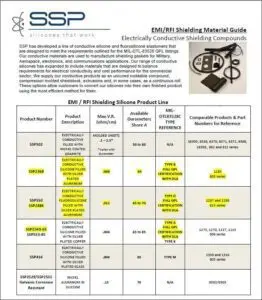
Download our EMI/RFI Shielding Materials Guide or our EMI/Silicones Catalog , or scroll to see the different types of electrically conductive compounds that we offer.
You can also see a breakdown of our most popular products by filler.